
Coffee County Criminal Court Records
A criminal court record is the case-level file kept by the court after a charge is filed. In Coffee County, felony criminal records route through Superior Court because Superior Court has broad criminal jurisdiction and handles felony trials. Misdemeanor and many traffic criminal matters route through State Court, where the State Court judge and solicitor-general are listed at the Coffee County courthouse address. Magistrate Court matters can appear early in the criminal path because that court handles warrants, first appearances, and preliminary functions. Douglas Municipal Court handles city ordinance, city traffic, animal-control, nuisance, and other local misdemeanor matters.
The Clerk of Superior Court is the central Coffee County clerk for Superior, State, and Juvenile records. For full criminal case files, certified dispositions, sentencing orders, and older records, the clerk remains the practical fallback. A criminal case file is broader than a single charge list. It can include the accusation or indictment, docket entries, hearing notices, bond orders, motions, plea forms, trial entries, verdicts, disposition sheets, sentencing orders, probation terms, restitution, and appeal notices.
The Coffee County State Court page is an assigned source for misdemeanor, traffic, judge, and solicitor-general context.
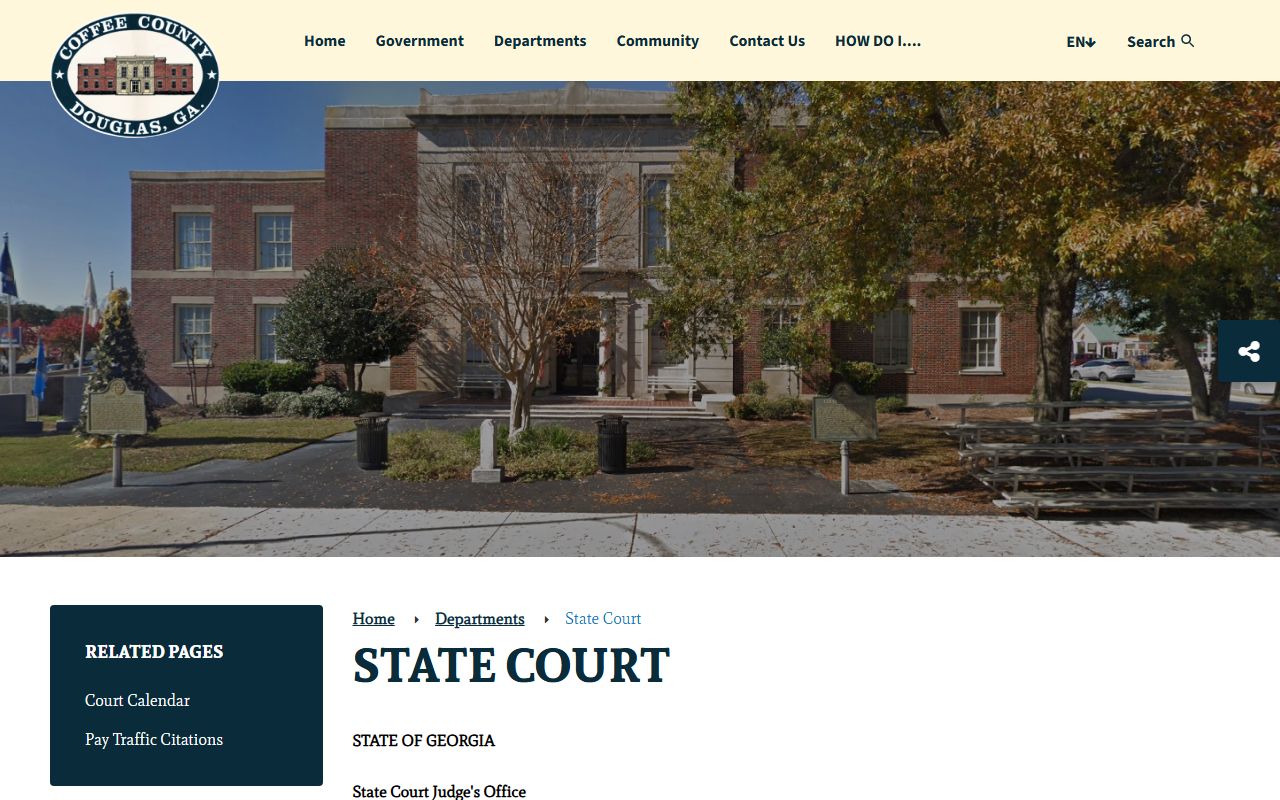
State Court information helps separate misdemeanor and traffic case records from felony records that belong in Superior Court.
Search Coffee County Criminal Court Records
There is no single Coffee County web page that exposes every public criminal case file. Use the court-record channel chain. Georgia Courts e-access redirects users to a provider website and requires an account. re:SearchGA and PeachCourt are Georgia provider paths for case information, filings, and court documents, but Coffee-specific document depth can depend on participation and permission level. The Clerk of Superior Court should be used for certified copies, older files, criminal dispositions, and records not visible online.
- Decide whether the matter is a felony, misdemeanor, traffic offense, municipal violation, or early Magistrate Court event.
- Search provider access by defendant name or exact case number, using Coffee County and case-type filters when available.
- Open the docket and confirm the court, charge, filing date, hearing history, plea, and disposition.
- Use the State Court solicitor-general or Waycross Judicial Circuit District Attorney context when prosecution-stage questions remain.
- Request certified dispositions, sentencing orders, or complete case copies from the Clerk of Superior Court.
For the charge list alone, use the companion page on Coffee County arrest records and court charges. For the broader civil, probate, traffic, and court-record system, use the main Coffee County court records page.
Coffee County Criminal Case Stages
A Coffee County criminal court record grows as the case moves from charge filing to disposition. A felony may begin with an arrest warrant or preliminary process in Magistrate Court, then move through Superior Court after indictment or accusation. A misdemeanor may move through State Court after the solicitor-general files or handles the accusation. Each stage can create a separate docket entry or document. A person can also have a jail booking record while the court case is still pending, so custody status and court status should be checked separately.
Case flow: Charges Filed › Arraignment › Pretrial / Motions › Plea or Trial › Disposition › Sentencing
| Stage | What Happens |
|---|---|
| Charges filed | The accusation, indictment, complaint, or related charging entry starts the court case record. |
| Arraignment | The defendant is advised of charges and enters a plea such as guilty, not guilty, or nolo contendere. |
| Pretrial / motions | Attorneys file motions, notices, discovery issues, bond requests, or calendar entries before plea or trial. |
| Plea or trial | The case may resolve by negotiated plea, trial verdict, dismissal, or other court-approved result. |
| Disposition / sentencing | The record shows the result and any jail, probation, fine, restitution, or appeal-related action. |
What Coffee County Criminal Records Show
Coffee County criminal court records can show much more than a charge name. The record may list the defendant, court, case number, prosecutor, defense counsel, judge, filed date, charge descriptions, count numbers, offense dates, arresting agency, warrant number, accusation or indictment number, bond action, docket entries, plea, disposition, sentence, probation terms, restitution, and appeal notices. Some files show each charge separately because one arrest or indictment can create several counts with different outcomes.
| Field | What It Shows |
|---|---|
| Case number | The court's criminal file number, useful for exact provider searches and clerk requests. |
| Defendant | The person charged in the criminal case, sometimes with limited identifying details. |
| Charges | The offense descriptions, counts, statute references, severity, and prosecutor-filed charge entries. |
| Plea | The defendant's answer to a charge, such as guilty, not guilty, or nolo contendere. |
| Disposition | The outcome for the case or count, such as guilty, dismissed, acquitted, dead docket, or nolle prosequi. |
| Sentence | Jail, prison, probation, fine, court costs, restitution, treatment terms, or other court-ordered conditions. |
| Restriction status | Whether public access may be limited by record restriction, sealing, juvenile law, or court order. |
Coffee County Charges vs Convictions
A criminal court record can show charges that did not become convictions. That distinction is critical in Coffee County. A charge is the formal accusation brought by the state or city. A conviction is a finding or plea establishing guilt. A charge may be amended, reduced, dismissed, dead-docketed, nolle prossed, or resolved through a plea to a different count. The public docket may still show the original charge history even when the final result is not a conviction.
| Charge | Conviction | |
|---|---|---|
| Stage | Filed accusation, indictment, complaint, or citation. | Final finding or plea establishing guilt. |
| Proof level | Based on filing standards and probable cause context. | Based on plea, verdict, or court adjudication. |
| Record effect | Can appear even if later dismissed or amended. | Can affect sentencing, probation, criminal history, and driver consequences. |
| Best verification | Read each count and status. | Request certified disposition when official proof is needed. |
Dispositions and Sentences
Reading a Coffee County criminal disposition means checking the outcome for each charge or count. A single case can include guilty pleas, dismissals, amended charges, and nolle prosequi entries. Georgia also uses dead-docket status, which means a criminal case is inactive while the prosecution is not currently moving forward. Sentencing entries can show jail or prison time, probation, fines, court costs, restitution, treatment terms, no-contact orders, weapons restrictions, or other conditions. Bench warrants and bond actions may appear when a defendant misses a date or violates a court order.
The Prosecuting Attorneys' Council listing identified in the research gives Waycross Judicial Circuit prosecution context for Coffee County felony matters.

Felony charge decisions and plea negotiations connect to the district attorney, while State Court misdemeanor and traffic prosecution connects to the Coffee County solicitor-general.
Coffee County Sealed vs Restricted Records
Georgia often uses the term record restriction rather than expungement. The GBI record restriction guidance explains the practical process tied to O.C.G.A. 35-3-37, including the role of prosecutor approval. For arrests after July 1, 2013, the research notes that there is no application process through GBI and the person must contact the prosecutor. For older arrests, the person applies through the arresting agency. Court sealing is a separate issue and may require a court order or rule-based process.
The GBI guidance page is an assigned Coffee County criminal court records source.
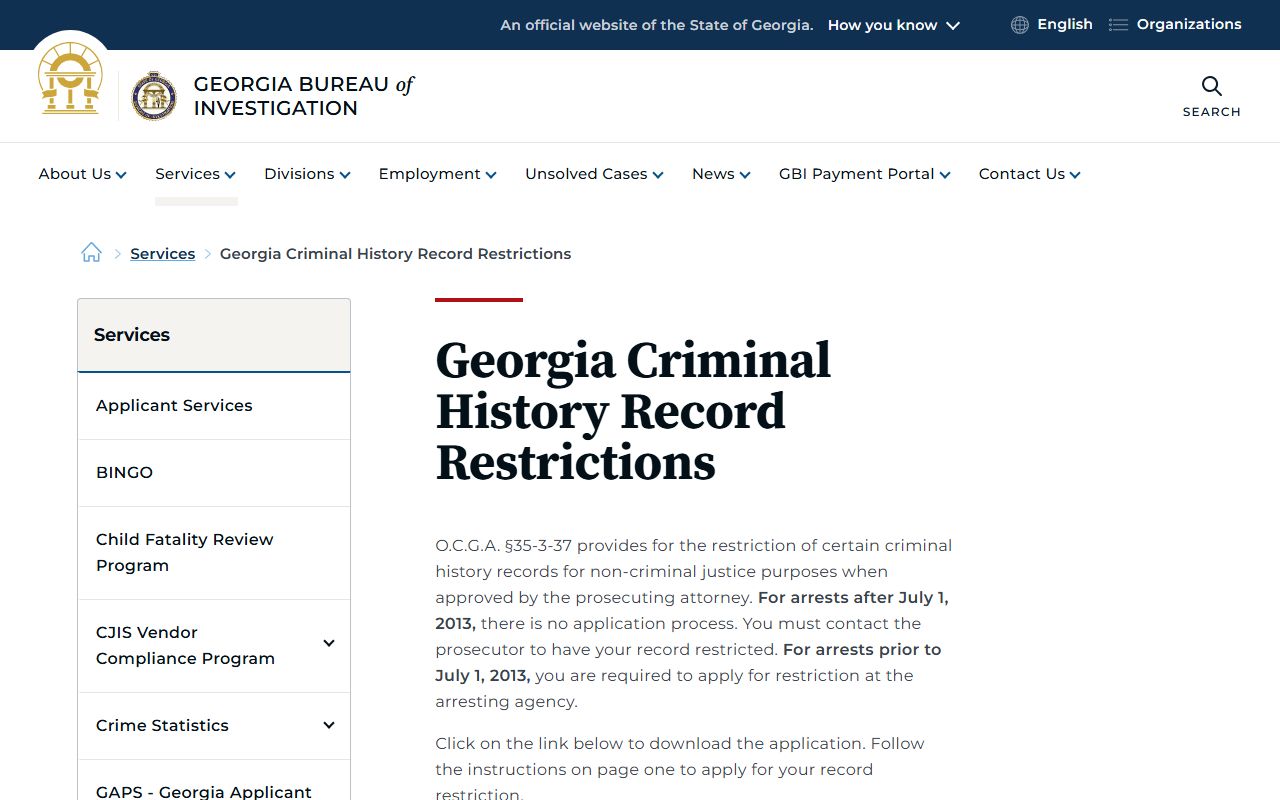
Record restriction may limit criminal-history access, but it does not automatically prove that every court docket reference has disappeared.
| Sealed Court Record | Restricted Criminal-History Record | |
|---|---|---|
| Source | Court order, rule, or confidentiality law. | Georgia criminal-history restriction law and prosecutor or agency process. |
| Public view | File or document may be hidden from public inspection. | Qualifying criminal-history entries may be limited for non-criminal-justice purposes. |
| Still available to | Court and authorized users under the order or law. | Criminal-justice officials and other users allowed by law. |
| What to verify | Whether the court file itself is sealed or redacted. | Whether the arrest, charge, and agency records were restricted after notice. |
Public Access to Coffee County Criminal Records
Criminal court files are generally public unless a law, court rule, court order, juvenile restriction, protected-identifier rule, or record-restriction process limits access. O.C.G.A. 50-18-70 states Georgia's public-record policy. O.C.G.A. 50-18-71 addresses access and fees. Uniform Superior Court Rule 21 covers limits on access to court files. Juvenile records are restricted under Georgia juvenile-law rules, and court files can redact Social Security numbers, account numbers, minors' names, medical information, and other protected data.
Key Statutes:
O.C.G.A. 35-3-37 controls qualifying Georgia criminal-history record restriction.
O.C.G.A. 15-11-704 limits inspection of juvenile court files except where law or court order permits access.
The O.C.G.A. 35-3-37 source appears in the assigned image set for criminal court records.
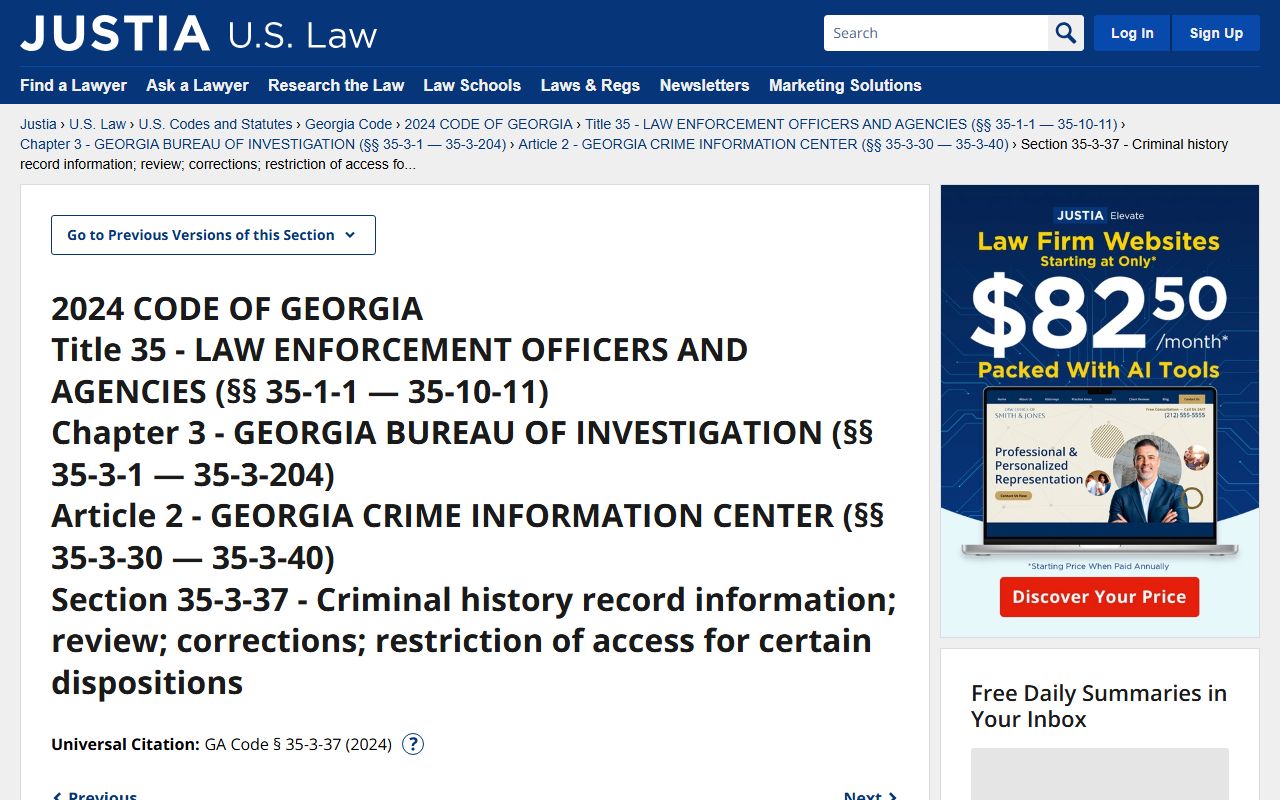
The statute is useful for restriction questions, but it does not replace the need to verify the court docket and certified disposition.
Coffee County Criminal Record Limits
Do not treat a jail booking, charge list, criminal court record, and statewide criminal-history report as the same record. A person may be booked at the Coffee County Pre-Trial Detention Center before the court case reaches disposition. The court file then tracks charges, pleas, motions, hearings, and sentencing. The statewide criminal-history record may follow different restriction rules. For in-custody status, use the sheriff's app or jail channels. For active warrants, use the warrant and court channels. For certified criminal dispositions, contact the Clerk of Superior Court.
The Georgia Public Defender Council page gives statewide defense-structure context for people who cannot afford counsel.

Public defense information is not a substitute for legal advice, but it helps identify the state structure behind appointed counsel in Georgia criminal cases.
Important: Criminal court records should be verified with the court before employment, housing, licensing, or legal decisions.